
MENU

How to Distribute Responsibilities
and Make Effective Decisions

By BlackCH
Table of Contents
Introduction
In Pokémon Unite, offlane also known as the solo lane, is one of the most demanding and misunderstood roles. As the only player holding down one side of the map, the offlaner has to balance survival, pressure, and map awareness. Whether you’re trying to deny enemy experience, secure crucial farm, or draw attention away from key objectives, mastering the offlane can completely shift the momentum of a match. This guide will teach you how to play the role effectively, when to rotate, and how to turn a lonely lane into your team’s biggest advantage.
What Is Offlane?
In Pokémon Unite, offlane refers to the side of the map that becomes isolated after the first rotations, not a lane you start alone. During the early game, both lanes typically have two players. But once objectives like Altaria or Regieleki spawn, one lane often gets left behind, and that’s when the offlaner’s role truly begins.
The offlaner is the player who stays behind when the rest of the team rotates. Their job is to hold pressure, defend goals, and continue farming while the rest of the map is active elsewhere. It’s a flexible role that demands good judgment — you must know when to stay, when to push, and when to regroup for objectives.
Strong offlaners are often Pokémon that can:
-
Survive ganks and buy time alone.
-
Clear waves quickly and safely.
-
Threaten side pressure or back caps without overcommitting.
-
Join fights fast when needed through mobility or teleportation moves.
In short, the offlaner keeps the team’s map presence alive when everyone else leaves. You’re not just defending a lane, you’re maintaining tempo and map control while the rest of the team focuses elsewhere.
Responsibilities of the Offlaner
Once your teammates rotate away, your lane becomes a zone you manage alone. Your main goal isn’t to win duels, it’s to keep your side of the map active while avoiding unnecessary deaths. A good offlaner maintains experience, vision, and pressure so the enemy can never play comfortably.
1. Stay Alive and Stall Pressure
Your survival is the most valuable thing you bring to the team. If you die, your goal zone collapses, and the enemy can freely rotate or score. Focus on dodging dives, retreating when needed, and forcing the enemy to waste time trying to remove you.
2. Maintain Experience Flow
Never let your lane go dry. Clear neutral wild Pokémon, contest enemy side camps when it’s safe, and deny farm whenever possible. Every bit of experience keeps you relevant when regrouping for major objectives.
3. Defend Goals Smartly
Defending doesn’t mean standing on the goal and hoping for the best. Track enemy positions, use your range or mobility to poke them off, and only commit when you know you can survive the follow-up. Sometimes letting a goal fall to regroup stronger is the smarter play.
4. Create Scoring Pressure
When you know where the enemy is, especially if multiple opponents are showing on the other side, take that window to push for scores. Even small scores add up, and forcing the enemy to backtrack keeps pressure off your team. Time your scores before major spawns to pull rotations or force reactions.
5. Read the Map and Rotate Intelligently
Before every major objective, decide if your presence will matter more holding the lane or joining the fight. If you’re behind, soak farm and defend. If you’re ahead, rotate early to help secure control. Great offlaners act before they’re told, reading the state of the game and moving proactively.
6. Communicate Constantly
Use pings to warn your team about missing enemies, incoming rotations, or scoring opportunities. The offlaner’s perspective often reveals what the rest of the team can’t see. Clear communication can prevent overextensions and lost objectives.
Who Should Offlane and When
The offlane role changes depending on the stage of the game and which goals are still up. Understanding who should take this position and when is key to maintaining map control and preventing unnecessary pressure on your side.
When T1 Goals Are Up:
During the early stages, top laners or tanks are typically the best choices for offlaning. Most top laners are bruisers or duelists capable of holding their own in 1v2 situations, while tanks can sustain long enough to defend the goal zone and stall pushes effectively.
Junglers generally shouldn’t offlane early since their main focus is creating KO pressure and controlling the pace of the map. However, there are specific exceptions. For example, if your team is running a Tsareena in top lane and you want to ensure she reaches level 6 as quickly as possible, sending her to jungle early can be a strong adjustment.
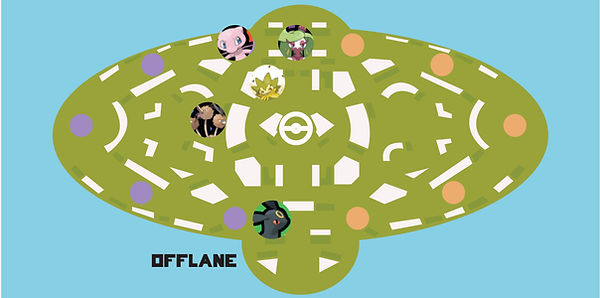
Offlaners (when T1 is up):

Offlaners (when T1 is up) examples:

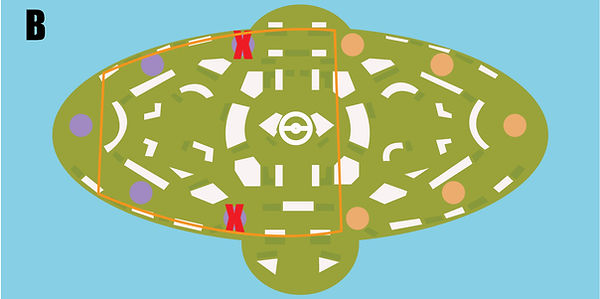
If One Or More T1 goals Are Broken:
Once Tier 1 goals are down, the map opens up and the offlane dynamic shifts. Speedsters begin to shine in this phase. Their high mobility allows them to move freely past the halfway mark, apply flank pressure, threaten back caps, and escape before the enemy can collapse. This constant pressure keeps opponents guessing and can create openings for your team elsewhere on the map.
Meanwhile, non-mobile bruisers and tanks should stay closer to their side of the map. Their priority is to hold remaining goals, defend jungle entrances, and buy time for rotations. They act as the anchor that stabilizes your half while faster teammates apply pressure across the field.
Offlaner Pokemon:


Regi Eleki Fights
When Regi Eleki spawns, tanks have one clear job, defend the Eleki push. Tanks should not be offlaning during this period. Their value comes from soaking enemy damage, controlling space, and protecting the goal zone until teammates can regroup. Letting a tank leave for an offlane play during an Eleki push almost always results in losing towers for free.
Late Game (Groudon Objectives)
As the match reaches the Groudon phase, roles become more defined. Bruisers and tanks should focus on protecting their mage or main ranged attacker, peeling, zoning, and maintaining control over key areas. In contrast, speedsters thrive on the opposite side of the fight. Their job is to create flank pressure, disrupt the backline, or even threaten double point caps if the opportunity appears.
Examples:
All-rounders are good at dealing with speedsters so you could make them hold top

Speedsters have more movility and flank potential than most all-rounders, on top of that they have stronger back cap capabilities.

When holding top positioning the all-rounder normally acts like a tank, which is great for making space so the attacker can play safetly, this means that the flank duties are extended to the speedsters

Common Mistakes to Avoid
Offlane isn’t about flashy plays, it’s about consistency and awareness. Even experienced players can throw entire games by misjudging when to rotate or when to fight alone. These are the most common mistakes to look out for as an offlaner.
1. Overextending Without Vision
Pushing too far when you don’t know where the enemy is can cost you everything. The moment you’re caught alone, you not only give up a knockout but also free farm and scoring opportunities. Always assume the jungler might be nearby if they’re missing from the map.
2. Defending Goals You Can’t Save
Not every goal is worth your life. If multiple enemies are collapsing on you, it’s often better to retreat and regroup rather than die trying to defend. Giving up a small goal is fine — giving up yourself and map control is not.
3. Ignoring Neutral Farm
Many players stand idly near their goal waiting for action instead of farming. Every wild Pokémon matters. If your lane is quiet, rotate slightly to take neutral or side camps. Staying active keeps your experience lead growing.
4. Rotating Too Late or Too Early
Leaving too early can open your lane to free scoring; leaving too late can make you miss the fight that decides the game. Watch the timer and the minimap. Plan your rotation before objectives spawn so you’re not caught out of position.
5. Dying Right Before Major Objectives
Getting knocked out right before Regieleki, Rayquaza, or Groudon spawns can lose your team the entire fight. Once the timer hits around 20–30 seconds before an objective, play safe and avoid unnecessary skirmishes.
6. Playing Silent
You see things your team doesn’t. If the enemy jungler shows up in your lane, ping it immediately. If multiple enemies rotate away, call it out. Communication is the difference between holding map control and losing objectives blindly.
Conclusion
The offlane might not always be the spotlight role, but it’s often the difference between control and collapse. A strong offlaner understands timing, pressure, and map flow, knowing when to stay, when to rotate, and when to draw attention away from the team.
Mastering this role isn’t about winning every duel; it’s about creating space and maintaining tempo. If you can stay alive, farm efficiently, and make the enemy constantly second-guess their movements, you’re already doing your job.
Every team needs stability, and that’s exactly what a good offlaner provides.